
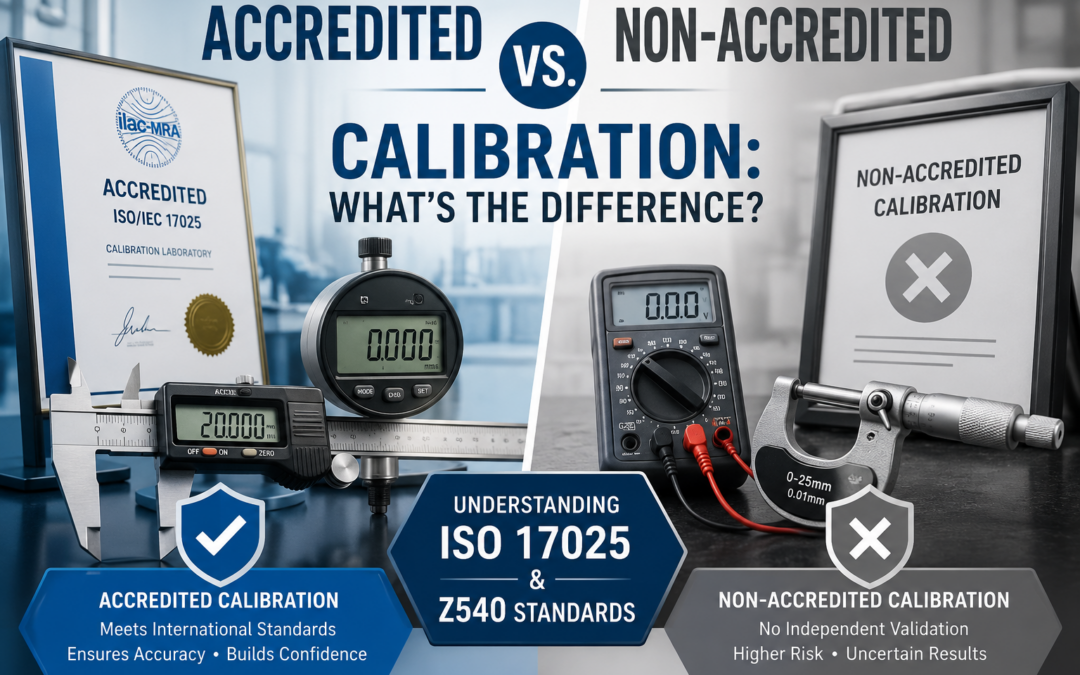
Accredited vs. Non-Accredited Calibration: What’s the Difference? Understanding ISO 17025 & Z540 Standards
In industries where precision matters—manufacturing, healthcare, aerospace, energy, and research—calibration is not just a technical requirement; it is a foundation for safety, quality, and trust. Every measurement tool, from pressure gauges to electronic testing equipment, plays a critical role in ensuring that operations run accurately and consistently.
This is where calibration accuracy standards and calibration compliance standards become essential. Whether you’re operating under strict regulatory environments or maintaining internal quality systems, understanding the difference between accredited vs non-accredited calibration can significantly impact your outcomes.
At Calibration Solutions, Inc., we help organizations navigate these standards through ISO 17025 calibration and Z540-compliant services, ensuring every measurement you rely on is trustworthy and traceable.
Why Proper Calibration Is Important
Proper calibration does more than fine-tune equipment—it protects your business.
With the right calibration lab accreditation and processes in place, you can reduce costly production errors, avoid failed audits, and improve overall operational efficiency. Reliable calibration also extends the lifespan of your equipment, helping you maximize return on investment.
Whether you require traceable calibration services or accredited calibration laboratory support, the right calibration approach ensures your tools consistently meet required specifications and industry expectations.
When Accuracy Fails
Imagine a production line running out of tolerance for weeks without detection. Or a medical device delivering inaccurate readings in a clinical setting. These aren’t just technical issues—they can become safety hazards, compliance failures, and costly recalls.
Without proper equipment calibration requirements, small measurement errors can quickly escalate into major operational problems. That’s why choosing the right calibration provider—and understanding the difference between accredited and non-accredited calibration—is so critical.
“Accurate measurement is the invisible backbone of quality. Without trusted calibration, every decision built on data becomes a risk.”
— Senior Quality Engineer, Metrology Industry
This perspective reflects a universal truth across industries: reliability starts with measurement integrity.
What You’ll Learn
By understanding accredited calibration meaning and how it compares to non-accredited calibration services, you gain the ability to make informed decisions about your quality systems.
This knowledge helps you choose the right service level for your needs—whether you require formal compliance under ISO 17025 calibration or flexible internal verification processes under Z540 guidelines.
Ultimately, you’ll know how to select the right partner and ensure your equipment consistently meets performance expectations.
Quick Trivia / Industry Insight
Calibration standards have evolved significantly over time. Before international frameworks like ISO 17025, calibration practices varied widely between industries and regions. This often led to inconsistent measurement quality and unreliable results.
Today, calibration accreditation standards such as ISO/IEC 17025 and ANSI/NCSL Z540 provide globally recognized frameworks. These standards ensure consistency, traceability, and technical competence across calibration certificate types and laboratory processes worldwide.
Practical Tips: How to Maintain Accurate and Reliable Equipment
Strengthening Accuracy Through Smart Calibration Practices
Maintaining reliable equipment is not a one-time effort—it requires consistent attention, proper planning, and working with the right calibration partner. Below are essential steps to help ensure long-term accuracy and compliance.
1. Schedule Regular Calibration Intervals
Establishing consistent calibration schedules is critical to maintaining measurement reliability. Equipment naturally drifts over time due to usage, environmental conditions, and wear.
By following a defined calibration interval plan, you reduce the risk of undetected inaccuracies. This also helps ensure compliance with industry calibration compliance standards and audit requirements.
2. Choose Between Accredited vs Non-Accredited Services Wisely
Not all calibration needs require accreditation, but understanding when it matters is key. Accredited calibration laboratory services under ISO 17025 are required when regulatory compliance, traceability, or external audits are involved.
On the other hand, non-accredited calibration services may be suitable for internal checks or non-critical applications. The decision depends on risk level, industry requirements, and quality expectations.
3. Maintain Detailed Calibration Records
Proper documentation is essential for audits and quality assurance systems. Keeping detailed records of calibration certificate types, results, and due dates helps maintain traceability.
These records also provide historical data that can be used to track equipment performance over time. This is especially important in regulated industries with strict equipment calibration requirements.
4. Watch for Early Signs of Equipment Drift
Equipment does not fail suddenly in most cases—it drifts gradually. Signs like inconsistent readings, unexpected deviations, or repeated adjustments may indicate calibration issues.
Early detection allows you to address problems before they impact production or compliance. Regular testing helps identify these shifts before they become costly.
5. Work with a Full-Service Calibration Provider
Partnering with a provider like Calibration Solutions, Inc. ensures access to both ISO 17025 calibration and Z540-compliant services. A full-service lab can support a wide range of instruments and industries.
They can also help you develop an M&TE program, determine calibration intervals, and ensure ongoing compliance. This reduces administrative burden while improving reliability and efficiency.
Contact Us Today
Accurate calibration is the foundation of reliable performance, compliance, and safety. Whether you need accredited calibration meaning clarification, ISO 17025-certified services, or dependable traceable calibration services, Calibration Solutions, Inc. is here to help.
📞 Call us at (801) 748-0764
📧 Email: debbie@calsolutions.us
Schedule your calibration service today and ensure your equipment meets the highest standards of accuracy and compliance
Recent Comments