
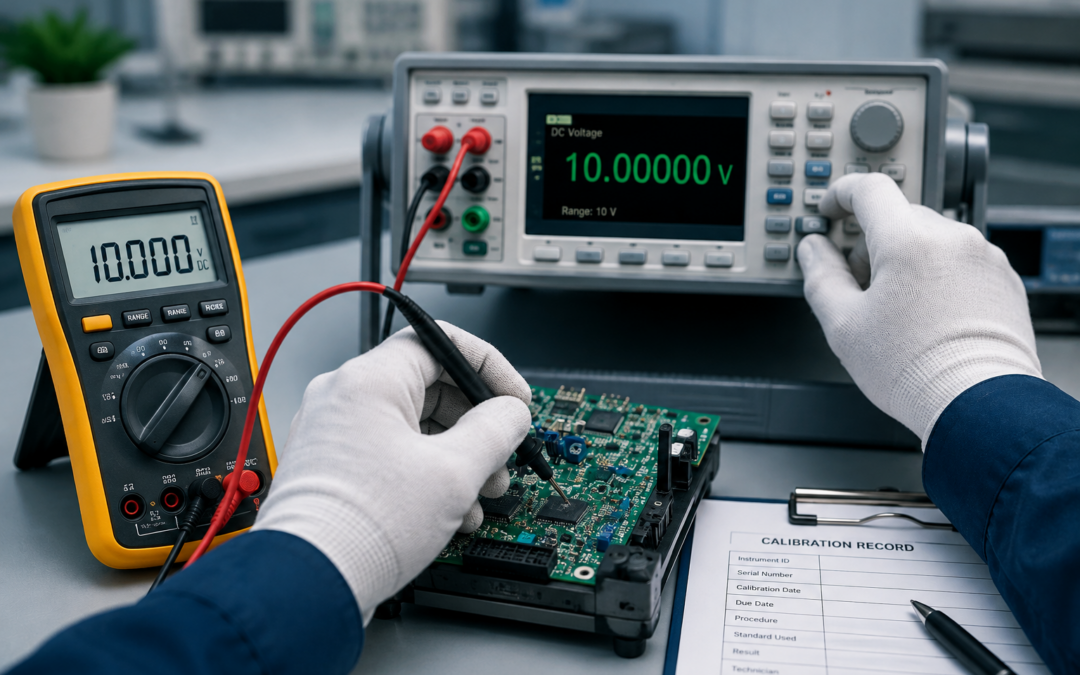
Precision Begins with Every Measurement
Whether you’re manufacturing medical devices, operating an industrial production line, or managing a quality laboratory, every measurement matters. A reading that’s even slightly inaccurate can lead to defective products, failed inspections, unexpected downtime, or costly rework. That’s why electronic calibration is an essential part of modern quality management.
Professional electronic calibration services ensure that measuring instruments continue to perform within their specified tolerances. Through regular electronic equipment calibration, businesses maintain reliable measurements, comply with industry regulations, and protect both product quality and customer confidence. Industries such as aerospace, healthcare, pharmaceuticals, food processing, manufacturing, utilities, and research laboratories all depend on precise measurements to keep operations running safely and efficiently.
Why Electronic Calibration Is a Smart Investment
Many organizations view calibration as another maintenance expense. In reality, it is an investment that pays for itself through improved productivity, fewer errors, and longer equipment life.
Routine electronic instrument calibration helps organizations:
- Improve measurement accuracy
- Reduce production errors
- Minimize equipment downtime
- Maintain product consistency
- Extend equipment lifespan
- Reduce waste and scrap
- Improve quality assurance
- Increase operational efficiency
When measurement equipment delivers accurate results, every decision made from that data becomes more reliable. This is why precision electronic calibration plays such an important role in continuous improvement programmes and quality management systems.
The Hidden Cost of Inaccurate Equipment
Measurement errors rarely announce themselves. Instead, they quietly influence production until problems become impossible to ignore.
Imagine a pressure transmitter that has slowly drifted outside its tolerance. Operators continue using it because it still appears to function normally. Weeks later, an entire production batch fails quality inspection because process conditions were incorrect. The business now faces wasted materials, delayed shipments, overtime labour, and dissatisfied customers.
Other consequences of neglected calibration of electronic equipment include:
- Product defects
- Failed customer audits
- Regulatory non-compliance
- Increased safety risks
- Equipment damage
- Production downtime
- Customer complaints
- Warranty claims
- Financial losses
- Damage to business reputation
The cost of preventive calibration is almost always far lower than the cost of inaccurate measurements.
Expert Perspective
The National Institute of Standards and Technology (NIST) emphasises the importance of measurement traceability in ensuring confidence in test results and supporting consistent, reliable measurements across industries.
This principle reminds us that calibration is about far more than compliance—it is about making decisions based on measurements that can be trusted.
Understanding Electronic Calibration Services
Not every calibration requirement is the same. Choosing the right service depends on your equipment, industry, and compliance obligations.
Accredited vs Non-Accredited Calibration
Accredited electronic calibration is performed by laboratories operating under recognized quality systems such as ISO 17025 electronic calibration. Accredited services provide documented traceability and verified measurement uncertainty, making them ideal for regulated industries.
Non-accredited calibration may still be suitable for equipment used in less regulated environments, but it may not satisfy customer or audit requirements.
Laboratory vs On-Site Calibration
A calibration laboratory offers controlled environmental conditions and specialised reference standards, making it ideal for highly sensitive instruments.
On-site calibration allows equipment to remain in operation while reducing transportation costs and production interruptions.
Calibration Certificates
A professional calibration certificate documents:
- Measurement results
- Equipment identification
- Calibration date
- Due date
- Traceability
- Environmental conditions
- Technician information
These records support audits, quality assurance programmes, and regulatory compliance.
Choosing Calibration Intervals
No single calibration schedule fits every organization.
Factors affecting calibration frequency include:
- Manufacturer recommendations
- Equipment usage
- Environmental conditions
- Historical performance
- Regulatory requirements
- Criticality of measurements
Businesses often ask, how often should electronic equipment be calibrated? The answer depends on risk, usage, and quality requirements. A trusted provider of electronic calibration services can help establish appropriate intervals.
Industry Insight: Why Traceability Matters
Modern metrology is built on traceability. Every accurate measurement can be linked through an unbroken chain of comparisons back to national or international measurement standards.
This traceability ensures that measurements taken in one laboratory are consistent with measurements taken anywhere else in the world. It is one of the primary reasons ISO 17025 electronic calibration services are recognized globally.
Best Practices for Maintaining Accurate Electronic Equipment
Accurate measurements don’t happen by chance. They require proactive planning and consistent maintenance.
1. Establish Routine Calibration Schedules
Waiting until equipment fails is never the best approach. Preventive calibration identifies small measurement errors before they become major operational problems. Following a documented schedule ensures consistency while reducing unexpected downtime.
2. Watch for Measurement Drift
Electronic instruments naturally drift over time due to age, vibration, temperature changes, and regular use. Monitoring equipment performance helps identify trends before accuracy falls outside acceptable limits. Early detection protects product quality and reduces repair costs.
3. Maintain Complete Documentation
Calibration records are invaluable during customer audits and regulatory inspections. Well-organised documentation demonstrates compliance while providing a complete history of each instrument. Digital recordkeeping also simplifies future maintenance planning.
4. Know When Accredited Calibration Is Required
Industries such as aerospace, medical devices, pharmaceuticals, and defence often require accredited electronic calibration. Using accredited laboratories ensures traceability, documented uncertainty, and compliance with recognized standards. Understanding these requirements helps businesses avoid costly audit findings.
5. Train Employees on Proper Equipment Handling
Even perfectly calibrated instruments can become inaccurate if handled improperly. Employees should understand proper storage, transportation, cleaning, and operating procedures. Good handling practices extend equipment life while preserving calibration accuracy.
6. Combine Preventive Maintenance with Calibration
Preventive maintenance and calibration complement one another. Cleaning, inspections, and minor repairs improve equipment reliability while calibration verifies measurement accuracy. Together they create a comprehensive equipment management strategy.
7. Choose an Experienced Calibration Partner
Choosing an experienced provider of calibration laboratory services offers long-term value. Look for technical expertise, fast turnaround times, traceable standards, and experience across multiple industries. The right partner becomes an extension of your quality assurance team rather than simply another vendor.
Frequently Asked Questions
What is electronic calibration?
Electronic calibration is the process of comparing an electronic measuring instrument against a known reference standard and adjusting it when necessary to ensure accurate measurements.
Why is electronic calibration important?
It improves measurement accuracy, supports compliance, reduces costly errors, and ensures equipment performs as intended.
How often should electronic equipment be calibrated?
Calibration intervals vary depending on equipment usage, manufacturer recommendations, operating conditions, and industry regulations.
What is ISO/IEC 17025?
ISO/IEC 17025 is the international standard that specifies the competence requirements for calibration and testing laboratories.
What does a calibration certificate include?
A certificate typically includes measurement results, traceability information, calibration date, technician identification, environmental conditions, and equipment details.
Precision Today Prevents Problems Tomorrow
Accurate measurements are the foundation of quality manufacturing, safe operations, and regulatory compliance. Investing in regular electronic measurement calibration improves productivity, protects valuable equipment, and reduces operational risk.
Whether your organization operates a production facility, laboratory, or industrial plant, consistent electronic test equipment calibration supports better decisions, stronger quality systems, and greater customer confidence. By partnering with an experienced provider of calibration services for electronics, businesses can protect their investments while maintaining the highest standards of precision.
Ready to Improve Measurement Accuracy?
Don’t wait for inaccurate measurements to affect your operations. Professional electronic calibration services help ensure reliable performance, regulatory compliance, and long-term equipment reliability.
Whether you need routine electronic instrument calibration, precision measurement calibration, or guidance on developing a preventive calibration programme, the experts at Calibration Solutions, Inc. are ready to help.
Contact Calibration Solutions, Inc. today to schedule your calibration service and keep your equipment operating with confidence, precision, and accuracy.
Recent Comments